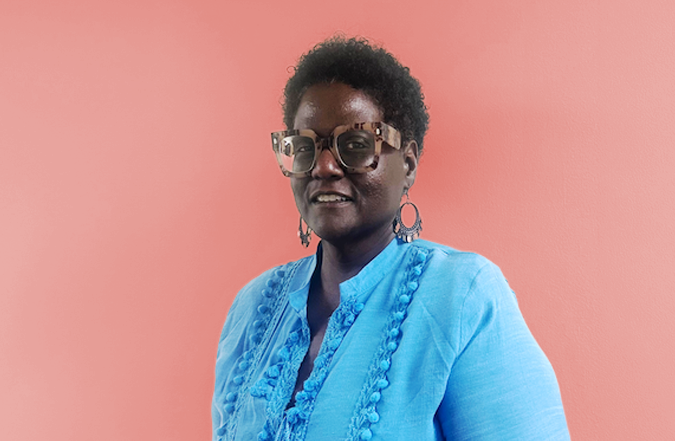
In her 26-year career with the State of Kentucky, Darlene Marshall-Ware has helped hundreds of children find stability and families access the resources they need to support them. Families clearly appreciate Darlene’s commitment. As one foster mother wrote to AdoptUSKids, “Darlene is an absolute angel on this Earth. … There is not another like her.”
How did you feel when you learned that this family nominated you to be recognized?
It’s my nature to think that I’m never doing enough. I think my colleagues would agree that we can be our harshest critics.
I’m very involved in my community—with organizations like United Way of Henderson County and the Henderson County Human Rights Commission—and have been recognized for my contributions with awards over the years. But hearing these words from a mother was special.
What are the qualities of a successful foster parent?
Patience. Flexibility. A willingness to spend one-on-one time engaging with a child.
A successful foster parent develops a working knowledge of how trauma affects brain development and children’s behavior. Because every child in foster care has experienced some form of trauma. By understanding trauma, we can help children heal.
What are some good sources of information about treating trauma?
Foster parent training is a good place to start. In Kentucky, we use a national curriculum that is heavily trauma focused. In my classes, I give families homework, including books to read and movies to watch. Instant Family is one movie that I ask everyone to watch, and we discuss segments from the film in class. I think that whoever wrote the script for that movie really understood this system. [They did! Read about the director of Instant Family on our blog.]
One of the books I ask families to read is The Body Keeps the Score. The author, a psychiatrist, explains how trauma physically reshapes the brain and the body and describes approaches and treatments that promote healing.
How do you support foster families?
I make myself available. The parents I work with have my personal and work cell numbers. Because we have respectful relationships, I know that if they call me “after hours,” it is because they have a need. And I answer.
I also help parents actively advocate for the best interests of their children. There is a right way and a wrong way to do that successfully. For example, it’s important that parents have a working relationship with the child’s CASA (Court-Appointed Special Advocate) volunteer and communicate with the child’s guardian ad litem attorney at the appropriate time and in the appropriate way. I guide them through that process.
Lastly, because I’ve been involved in the community for many years, I’m blessed with a network I can call on to help families find extra support and resources. When someone in the community hears about my work and asks me how they can help, I give them a list!
Final thoughts?
My faith is my foundation. I believe that I’ve seen miracles happen in children’s lives, and that’s because of the village—faith-based community, friends, colleagues, and community providers—that have been put into my life to help me do this work.