“I wasn’t sure what to expect, but I went ahead and signed up,” said Laurie Hagelman, recalling how she became a foster parent.
At the time, she was a teacher in rural Alaska. She noticed some of her students were living in unsafe situations, but the limited number of local foster families made it challenging to move children to a safer placement. “I felt like I was being called to step into that role,” she said.
Years later, she married Eric, who shared her passion for supporting youth in foster care. “I wanted to start working with kids in our community,” Eric said. Soon after, they began fostering together.
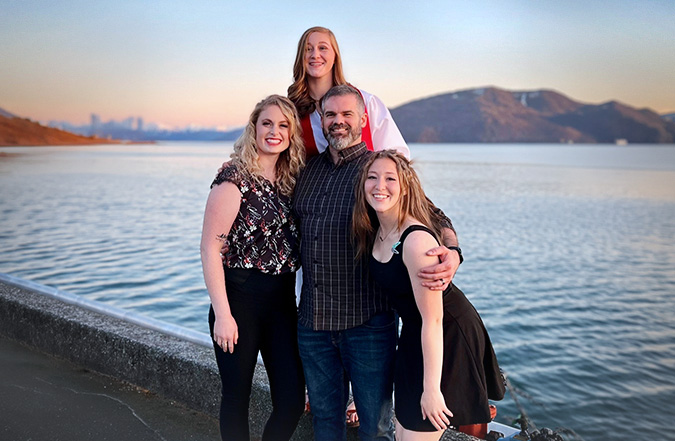
One evening, a caseworker called to ask if they could host two sisters, Sophia, 15, and Sierra, 13. Their first night together, Laurie traveled to Juneau with the girls as part of their placement process. Withdrawn and shy, the girls kept to themselves—until they arrived at their hotel and jumped in the pool. “It was one of the first times I really saw glimpses of them just being kids, laughing, playing, and letting their guard down a little,” Laurie said.
With Laurie and Eric by their side, the girls slowly began to open up, and the family bond grew. Laurie and Eric adopted the girls in 2021.
Navigating the system
Over the years, Laurie and Eric learned that foster care and adoption required more than compassion and good intentions. It meant navigating complex systems and coordinating services across rural Alaska, where long travel distances and limited local resources often made access to support more difficult.
The couple also lacked opportunities to connect with other foster families in their area.
“There were no other foster families to meet with where we lived,” Eric said. Coordinating appointments, educational support, and medical care for their daughters, Laurie and Eric often figured things out on their own. Realizing others felt isolated, too, strengthened their resolve to help.
Staying grounded in purpose
What kept the couple grounded was staying connected to the purpose that led them to foster.
They focused on remaining present with, committed to, and supportive of the children placed in their home. “I think if you go into it with the intention of helping a child in need, that’s going to set you up for success,” Eric said.
Watching their daughters grow into adulthood is one of the most meaningful parts of their journey. “Getting to see them grow in ways that we just never expected has been so rewarding and so worthwhile,” Laurie said. After adopting their daughters, Laurie and Eric continued to foster children, including another pair of siblings whom they hope to adopt soon.
Turning experience into advocacy
Through community-building efforts, Laurie and Eric are strengthening support systems for foster families through peer connections and shared experiences. “If you have things you want to be different, then you need to step up and be a part of the solution,” Laurie said.
She advocates for foster and adoptive families through her role on Alaska’s Resource Family Advisory Board. Meanwhile, Eric is developing an app designed to connect new foster parents with experienced families.
“I would encourage foster families to share their stories,” Laurie said. “I think sometimes we can feel so isolated or, like, this is only happening to us.” After stepping without knowing what to expect, Laurie and Eric hope their story inspires other families to answer that same call even when the path forward feels uncertain.
Additional resources:
- AdoptUSKids Speakers Bureau: Families interested in sharing their experiences can advocate and educate others by sharing their stories on the path to permanency.
- Post-adoption support services: Adoptive families can learn about post-adoption resources and access ongoing support in their area.
- Learn about foster parenting: Explore what it means to become a foster parent.