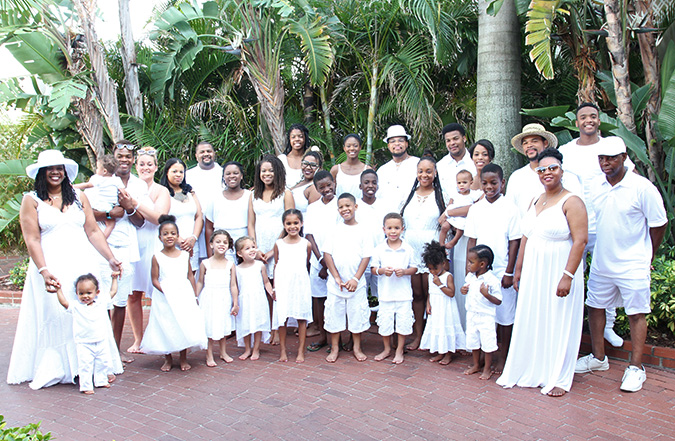
Keeshann Jones and her husband, James, were already the parents of five birth children when they adopted a 16-year-old boy from foster care 30 years ago. Since then, they’ve welcomed 16 more children into their family through guardianship and adoption from foster care.
Her decades of parenting experience have taught Keeshann many things, including the fundamental lesson that you cannot care for children without caring for yourself. Today, she shares tips in workshops, presentations, and in her book, Keys to Self-Awareness, a Guide to Identifying Behaviors Within Oneself.
Recognize traumas and triggers—your own and your children’s
One of the first things Keeshann encourages caregivers to do is to look inward.
Understanding your own history, she says, makes it easier to understand the children in your care. “That self-reflection isn’t easy, but asking yourself—and your children—the hard questions opens the door to healing.”
In her workshops and book, Keeshann offers simple prompts to start that healing process:
- Can you think of a time when you reacted strongly to something small?
- Can you connect that response to an earlier experience?
Once you make those connections, Keeshann believes, the past traumas and triggers lose some of their power. “It’s no longer an open wound—it’s a scar. You can acknowledge it and move forward.”
The approach helps when working with children, too.
“Don’t let kids dismiss their feelings,” she said. “Stuffed-down emotions always come out eventually. When my kids clam up, I tell them, ‘When you’re ready, I’m here. But I won’t wait forever. If you don’t bring it up—I will!’”
And when children do open up, she emphasizes, the most important thing is to listen—really listen.
Active listening means pausing to understand another person’s experiences and validate their feelings. “People think they’re listening just because they stopped talking. Listening is hearing without having an answer.”
Find support and the right resources
Parenting more than 20 children has given Keeshann a deep well of strategies to draw from. And she has learned that an approach that works with a child one time might not work the next. “I have my playbook, and I’m always ready to pivot,” she said.
But even with decades of experience, Keeshann knows some challenges require outside support from behavioral and mental health professionals.
“Seeking counseling for your child and yourself is not taboo,” she said. “The key is to find the right counselor—someone who helps you grow.”
Just as important is having a community to lean on. That might include other foster parents, faith communities, neighbors, or extended family.
“You can’t do this alone,” she says. “You need support so you can support your child.”
Keep growing, and help your children grow
Keeshann has been a mother for most of her life, and she says she can’t imagine a time when she and James won’t have children in their home. But she’s intentional about not letting parenting become her entire identity.
“I’m a full-time mom, but I’m also a full-time me,” she said. “I’m pursuing interests that enrich me as a person. And I’m modeling that for my kids.”
One way she does this is by involving her children in her work directing short, inspirational films. By sharing her goals and letting her kids see the steps she takes to reach them, Keeshann shows them what it looks like to work toward something you care about.
“I want my kids to see that life can be bigger than what they’ve experienced—and that, with work, they have the potential to achieve their dreams.”
Learn more
- Read more about Keeshann’s work and life on her website.
- Learn how to find post-adoption support in this AdoptUSKids blog article.
- Find advice about working with an adoption-competent therapists in this Child Welfare Information Gateway publication.
- Read this Families Rising article about self-care for foster parents.
Links to external websites are provided for convenience. We are not responsible for the content of third-party websites.