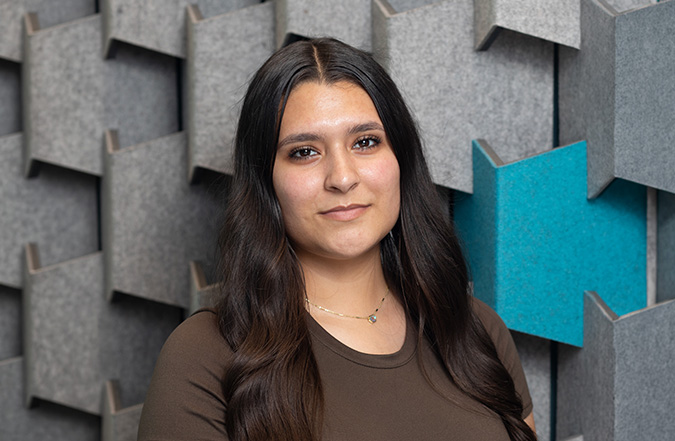
A common thread woven through the experiences of youth in foster care is the importance of connection – to family, friends, community, and culture. For Annemarie Corbin, who entered foster care as a baby, closeness to her siblings and Indigenous culture has shaped her identity, provided stability, and nurtured a sense of belonging.
As one of 12 children, Annemarie is especially close to her older twin brothers, Noah and Kyle. Together, they navigated placements, including a period when they moved back in with their birth mom and met nine additional siblings for the first time. This included their younger sister, who Annemarie quickly bonded with.
Though separation was difficult, each reunion brought joy.
“Every time we were together, it reminded me that I belonged somewhere,” she said. In 2021, the four siblings were adopted together.
Along the way, Annemarie deepened her connection to her Tribe and culture. As a member of the Comanche Tribe, she discovered the importance of community, tradition, and family.
Her experience shows why maintaining family and cultural ties matters during and long after a young person exits foster care.
Sibling connections create stability
Now 20 years old, Annemarie credits much of the stability she felt throughout her time in foster care to Noah and Kyle.
“Growing up in foster care means you’re constantly going through changes. And my siblings were one of those few things that were constant,” she said.
The three were often placed together, sharing a childhood filled with LEGOs and Minecraft. That love of LEGOs followed her into adulthood, scattered ‘like everywhere’ in her house, she laughed.
Growing up with her brothers meant Annemarie had people who shared her history and understood where she came from, even when so much around her changed.
The challenges that come from sibling separations
Noah, Kyle, and Annemarie always shared a strong connection. Building relationships with her other siblings, however, took time.
She recalled the unfamiliar feeling when meeting her other siblings for the first time. “When you didn’t grow up together, it’s like you’re meeting a stranger,” she said.
Annemarie didn’t get to share the typical childhood milestones and experiences with many of her siblings because they were separated throughout their time in foster care.
“Every time we split up, it felt like I was losing another part of my family that I was trying to grab on to,” she said.
But her relationship with her younger sister persevered. Annemarie embraced her role as an older sister. Together, they played Barbies and joined cheerleading. Their bond grew so strong that her sister refused to move to another placement unless Annemarie went with her. “It really showed me how important our relationship is,” she said.
Cultural connections shape identity
Annemarie’s relationship to her Indigenous heritage is an important part of who she is. Annemarie is a proud member of the Comanche Tribe, but growing up, she didn’t always have opportunities to connect with her culture.
“Being a Native child in foster care, staying connected to my culture wasn’t always an easy thing. It kind of feels like you’re missing part of your identity because you don’t really know where you come from,” she said.
That changed when she was placed in a home for Native youth, where traditions started to come to life and helped Annemarie connect with her roots.
“[It] helped me recognize how important my heritage was and inspired me to learn more about my Tribe,” she said.
This included teaching herself beading. For her high school graduation ceremony, she decorated the rim of her graduation cap with blue, yellow, and red beads—incorporating the colors of her Tribe.
She also discovered a love of powwows. Drawn to the dancing, music, and regalia, Annemarie embraces the energy and sense of community she finds there. “You can feel the beat of the drum in your heart and your soul. It’s like one big family community. It’s so amazing,” she said.
That sense of community is reflected in some of Annemarie’s favorite foods, too. “I will die for Indian tacos any day,” she said of the delicious fry bread filled with toppings. “I would eat that every single day of my life if I could.”
Her connection to her Indigenous culture has strengthened her relationships with her siblings. She and her brothers attend annual powwows, while her growing connection to her Tribe has also helped her understand that family extends beyond biological relationships.
“All of these people in the Native community, even though they aren’t a part of your birth family, they’re your family, too. It’s really important to stay connected to that,” she said.
Adults can help keep connections strong
Annemarie’s experience offers practical guidance for adults supporting young people in foster care. Small, intentional efforts can help youth keep important relationships with their siblings, even when they can’t live together.
Regular visits, phone and video calls, or spending time together virtually, like playing video games, can help siblings continue building shared experiences. Giving young people a say in how those relationships are maintained can be just as important.
“Every child has a voice, no matter what age they are,” she said.
For Native youth, that same intentional support is needed to strengthen cultural ties. “Staying connected to a Native child’s culture is as important as meeting their physical and emotional needs,” she said.
Adults can help young people attend powwows, connect with members of their Tribe, and participate in Tribal traditions.
“You don’t have to have all the answers, but you have to be willing to learn, listen to them, and make those connections to their Native identity and culture a priority,” she said.
Today, Annemarie is in her junior year studying elementary education at the University of Oklahoma, with hopes of becoming a fourth or fifth grade teacher. She also advocates for youth in foster care through the AdoptUSKids Speakers Bureau, drawing from her own experiences.
Her story is a strong example of how sibling relationships and cultural identity are not extras in a young person’s life; they are essential. They can shape how young people understand who they are, where they belong, and the relationships they carry with them after their time in foster care.
Additional resources
Comanche Nation website: Learn about the Comanche Nation, youth services, and annual Tribal events in Oklahoma.
Oklahoma Indian Child Welfare Association: Find resources and Tribal contacts in Oklahoma.
The National Indian Child Welfare Association’s resource library: Discover helpful guides, research, and tools to support the well-being of Native children.
Profiles of Hope: Taylor, Kelin, and Nick: Part of a series of profiles that highlight the adoptive journey, Taylor, Kelin, and Nick share their story of healing and growth.
Keeping siblings together: Discover the realities of sibling adoption.
Sibling bonds: Three families share their stories of adopting siblings: Read about the experiences of three families who adopted siblings.